
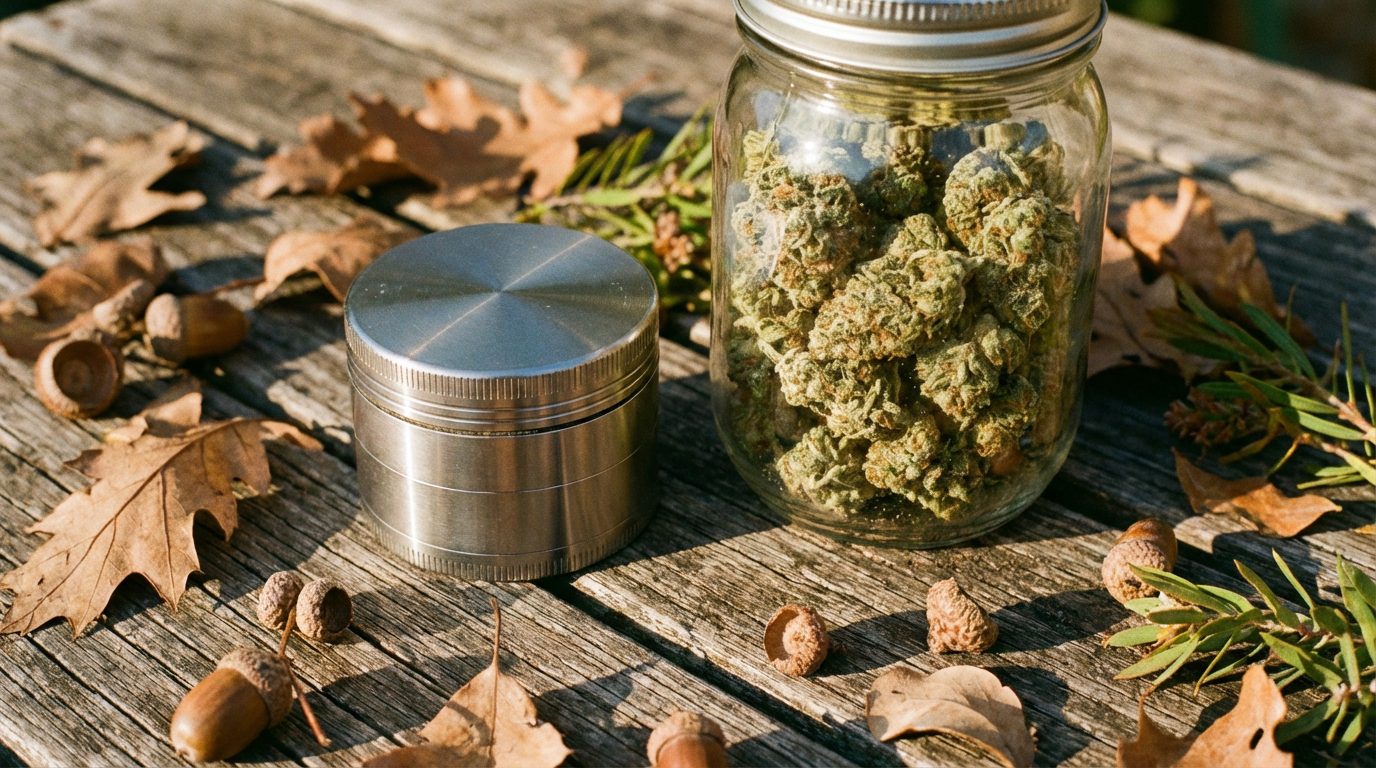
The days are getting shorter across the Highveld, the nights are carrying that distinctive nip of the approaching winter, and if you listen closely, you can almost hear the collective sigh of relief from outdoor growers across South Africa. It is that magical time of year: harvest season. For months, you have battled the elements. You have waged war against red spider mites, frantically moved pots out of sudden hailstorms, and navigated the delicate dance of nutrient schedules during load shedding blackouts. Now, the fruits of your labour are hanging to dry or, for the early birds, already burping away in curing jars. The hard part is over, right? Well, not exactly.
There is a prevailing myth in the Home Grow SA community that the job finishes once the bud is in the jar. We tend to think of the lifecycle of cannabis cultivation as ‘seed to harvest’, or perhaps ‘seed to cure’. But if we are being intellectually honest about the craft, the journey actually goes from soil to smoke. There is a final, often overlooked hurdle that stands between you and the sublime experience you have spent six months cultivating: how you break that flower down. It is a tragedy of Shakespearean proportions to spend half a year obsessing over soil pH and organic super-soil amendments, only to take your pristine, trichome-laden buds and pulverise them into dust with inferior equipment at the very last second. Preserving your autumn harvest integrity isn’t just about the cure; it is about the consumption.
To understand why this matters, we have to look a little closer at what we are actually trying to preserve. When you look at your finished flower under a loupe, you are looking at a landscape of trichomes—specifically, the capitate-stalked trichomes that look like tiny crystalline mushrooms. This is where the magic lives. These microscopic glands house the cannabinoids (THC, CBD) and the terpenes that give your specific cultivar its unique nose and effect. These structures are incredibly volatile. They are sensitive to heat, light, and, most crucially for this conversation, physical agitation.
Think of a ripe grape. If you want to experience the full flavour profile, you handle it gently. You wouldn’t smash it with a hammer before eating it, because you would lose all the juice to the table. Yet, this is precisely what the vast majority of smokers do to their cannabis. Traditional grinders, even the expensive ones, operate on a principle of shredding and tearing. They utilise sharp teeth to shear the plant matter apart. While this certainly breaks the bud down, it does so violently. The friction creates heat, which can degrade volatile terpenes, and the shearing action ruptures the trichome heads, smearing that precious oil all over the teeth of the grinder rather than keeping it on the plant material where it belongs.
This is where the distinction between ‘grinding’ and ‘milling’ becomes the most important lesson a connoisseur can learn. In the culinary world, how you process an ingredient dictates the final flavour. A crushed garlic clove tastes different from a sliced one. The same logic applies to growing cannabis and preparing it for use. We need to move away from the concept of crushing and toward the concept of crumbling. Nature designed the cannabis flower to break apart at specific weak points in its structure (the calyxes). When you respect the plant’s structural integrity, you get a fluffier consistency that burns more evenly and tastes significantly better.
It is in this pursuit of perfection that we find the ultimate tool for the job. If you are looking to treat your harvest with the respect it deserves, you need to look at the Flower Mill, Next Gen Premium, 2.5 Stainless steel. This is not just another grinder; it is a fundamental reimagining of how we prepare flower. Unlike traditional designs that use teeth to crush, the Flower Mill utilises a rotor and stator system to gently roll the bud across a screen. This encourages the flower to crumble naturally where it wants to break apart, rather than forcing it.
Why does this distinction matter for your autumn harvest? It comes down to the integrity of the trichome. Because the Flower Mill, Next Gen Premium, 2.5 Stainless steel mills the flower progressively, the trichomes remain attached to the plant material rather than being knocked off or smashed against metal teeth. The result is a pile of milled herb that is visibly more sparkly than what you would get from a conventional grinder. You have spent months growing those trichomes; it makes zero sense to leave half of them stuck to the inside of a cheap aluminium puck.
Let’s talk about the consistency of the burn, because this is where the physics of airflow comes into play. When you use a traditional grinder that shreds the bud, you often end up with a mix of dust and chunks. This inconsistency leads to canoeing (uneven burning) in joints and restricted airflow in vaporisers. A milled consistency, however, is light, airy, and uniform. It creates a perfect matrix for air to pass through. For the Home Grow SA community members who prefer rolling, this means a smoother draw and a joint that stays lit. for those who vape, it means more surface area is exposed to the hot air without restricting the draw, leading to thick, flavourful clouds that truly represent the terpene profile of the strain.
Speaking of terpenes, this is perhaps the most heartbreaking loss when using inferior tools. Terpenes are what dictate the ‘high’ just as much as THC does—a phenomenon known as the entourage effect. Linalool relaxes you; Limonene uplifts you. But these organic compounds are volatile. The heat generated by the friction of a teeth-based grinder can cause these terpenes to evaporate before they ever reach your rolling paper. By using the gentle milling action of the Flower Mill, Next Gen Premium, 2.5 Stainless steel, you minimise thermal transfer. The stainless steel construction acts as a thermal mass, keeping things cool, while the milling action ensures the volatile oils stay intact. The difference in smell between a ground bud and a milled bud is noticeable instantly. The milled bud smells like the living plant; the ground bud smells like… well, cut grass.
We also need to address the material safety aspect of your toolkit. As we become more conscious of what we put into our bodies—growing organic, flushing nutrients, curing properly—we should also be conscious of metal shavings. Cheap aluminium grinders are notorious for flaking over time. If you have ever noticed your grinder sticking or the teeth looking dull, that metal went somewhere, and it likely went into your lungs. The food-grade stainless steel used in the premium Flower Mill eliminates this risk. It is a buy-it-for-life investment that ensures the only thing entering your system is the clean, pure flower you grew yourself.
The ritual of consumption is the final act of the grower’s year. There is a profound satisfaction in taking a jar down from the shelf, hearing that perfect ‘snap’ of a properly cured bud, and preparing it for a session. It is a moment of reflection on the season—remembering the heavy rains, the early mornings, and the specific challenges of that grow cycle. Using a premium tool elevates this ritual. It changes the preparation from a chore into a tactile experience. The smooth rotation of the mill, the way the flower processes effortlessly, and the resulting fluffy mountain of green is the reverence the plant demands.
Furthermore, versatility is key for the modern South African consumer. We are seeing a massive shift in how people consume cannabis. It isn’t just about the massive spliff anymore; it’s about micro-dosing, dry herb vaping, and crafting edibles. The control you get with milling allows for better extraction if you are making your own oils or butter from your harvest trim and popcorn buds. By keeping the trichomes intact during the breakdown, you ensure better potency in your edibles. It creates a uniformity that allows for predictable dosing, which is the holy grail for home edible makers.
As the autumn leaves fall and we settle into the cooler months, the curing jars in our cupboards represent potential energy. They are batteries of relaxation and creativity waiting to be unlocked. But unlocking them requires the right key. If you treat your harvest with roughness, you get a rough experience. If you treat it with finesse, you unlock the true potential of the genetics.
So, as you stare at your supply that needs to last you until next season, think about the integrity of that stash. Think about the ‘angels share’—the portion of quality lost to bad processing. You wouldn’t pour a vintage Pinotage into a plastic cup, and you shouldn’t put your artisanal, sun-grown Durban Poison into a garage-station plastic grinder. The Flower Mill, Next Gen Premium, 2.5 Stainless steel is more than just a luxury accessory; it is the final piece of the horticultural puzzle. It ensures that when you finally sit back, spark up, and exhale, the taste on your tongue is exactly what the earth intended it to be: pure, potent, and preserved.
Keywords: Growing Cannabis, Harvest Season, Cannabis Curing, Home Grow SA, Terpenes